
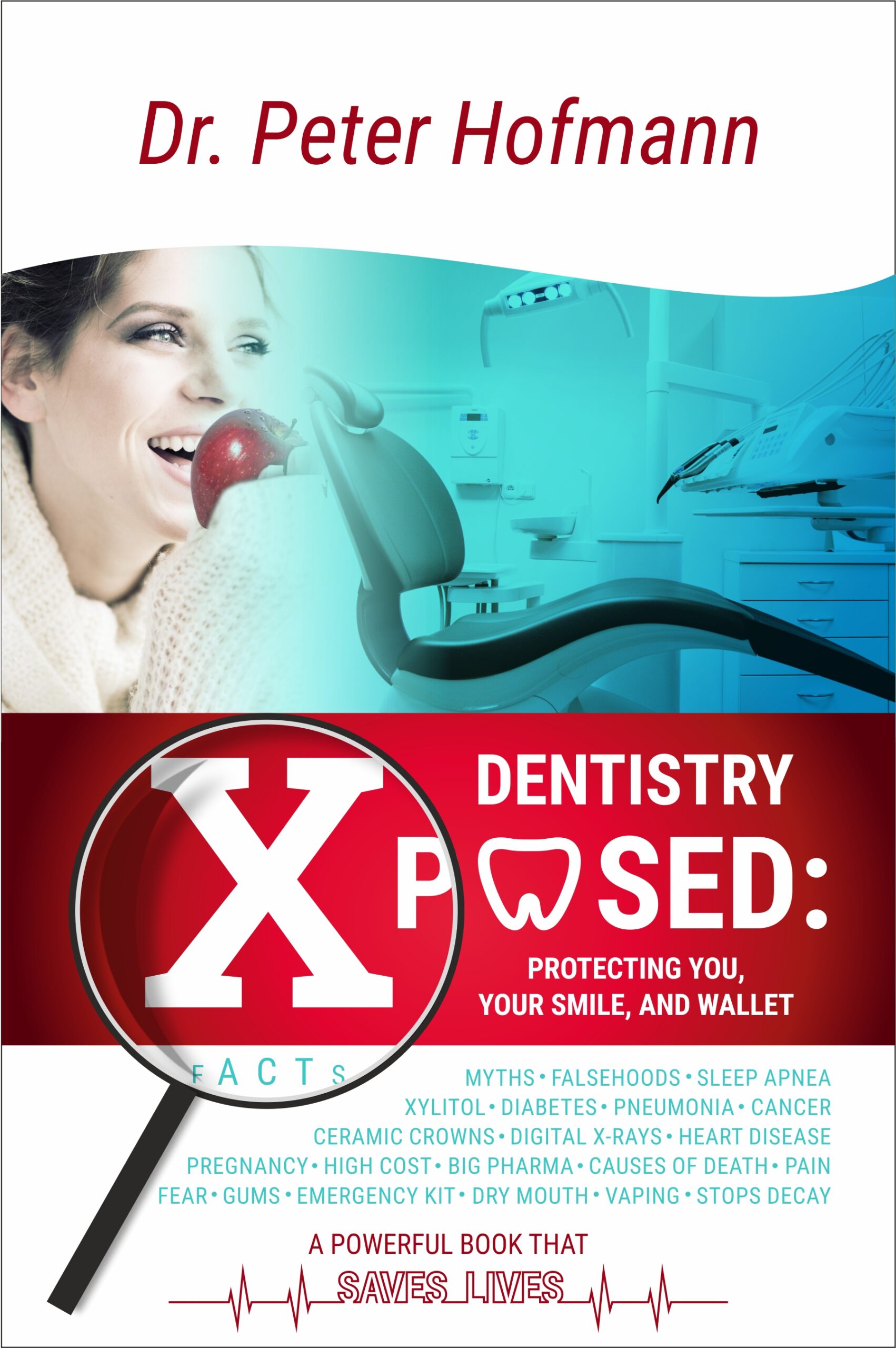
Xylitol is a natural sugar to the extent that it is produced naturally by both the animal and the plant kingdom. It is found in trees and plants and may be the major vehicle in propelling water to the core fruit, kernels, or leaves of these root based plants. Unlike animals, trees must move water from deep in the ground to leaves that may be hundreds of feet above ground. They do not have a heart but they do have hypertonic and hygroscopic molecules like xylitol which can draw water upward. Humans manufacture xylitol in small amounts and therefore have a built-in affinity for its utilization and metabolism.
The makeup of xylitol is simple and dynamic. Like the core molecule of DNA, xylitol is a pentose sugar. It has symmetrical array of 2 Carbon to OH groups attached to a central carbon-OH group. Two or Three week bonds allow the OH groups to loose the hydrogen atom and draw other positive ions such as Calcium. The Ca+ ion has a double bond ability but might be shared between a tri-dentate system of carboxyl groups- which would share the 2 bonds between 3 carbons thus creating a system of weak bonds allowing the Calcium to be transported and then released. This may be the mechanism by which it helps to re-mineralize both teeth and bone. The structure is configured as show below:
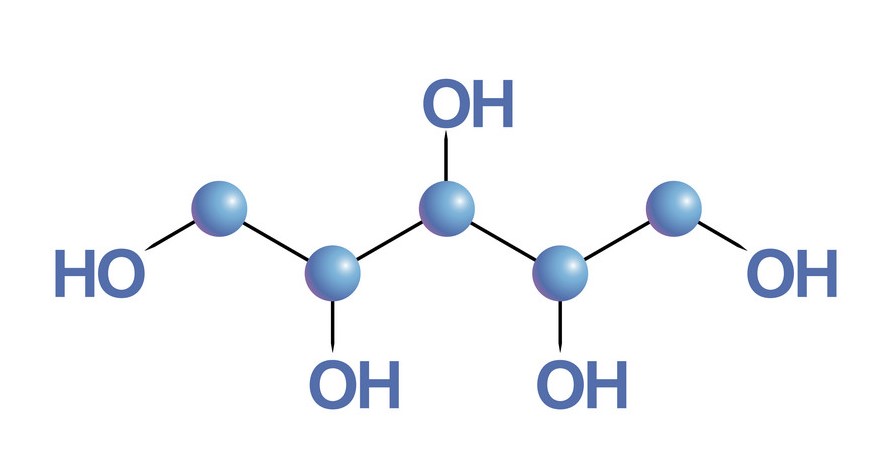
Unlike xylitol, sucralose or Splenda is a synthetic sugar made by attaching 3 chlorine atoms to sucrose in order to staple together the 6 carbon fructose to the 6 carbon glucose. It is therefore a large 12 carbon sugar with 3 CL atoms that some claim is like a pesticide. Eight out of 10 Americans now consume some sort of artificial sweetener. Last year alone the food industry introduced 2,225 reduced-sugar and sugar-free foods, many of them made with sucralose. Chemical additives are not new and of course most processed foods contain more than one artificial flavoring, emulsifier, coloring, or gelling agent. Sugar substitutes are among the most-studied additives in the world. Yet rumors of their side effects persist, and their escalating potency demands attention.
Each of these sugar substitutes was discovered by accident. Saccharin was invented in Baltimore by two chemists at Johns Hopkins University who were experimenting with coal-tar derivatives. Aspartame was found in the 1960s by a medical chemist who was investigating a drug for gastric ulcers. Sucralose was discovered in 1976 by a graduate student who had been told to test some compounds, but he misunderstood and tasted them instead.
Below is the structure of sucralose:
Another synthetic sweetener is Aspartamine or NutraSweet:
Aspartame (marketed originally as “NutraSweet” and now “AminoSweet”) is the oldest of the synthetic sweeteners. It is a dipeptide composed of two natural amino acids. .Aspartame is roughly 200 times sweeter than sucrose, which is ordinary sugar. The current best process for the synthesis of aspartame is by coupling two amino acids using an enzyme engineered to perform this task. In the body, aspartame is then broken down into aspartic acid, phenylalanine, and methanol.

These three constituents of aspartame are natural compounds. Aspartic acid is a natural amino acid that binds (weakly) to a neural receptor called the NMDA-receptor. This receptor is associated with development of the synapses in the brain, affecting memory and learning. Phenylalanine can be converted into tyrosine (another amino acid) in the body. Individuals with phenylketonuria cannot consume aspartame because they lack an enzyme that correctly converts phenylalanine to tyrosine. Finally, methanol is the smallest alcohol in existence with the formula CH3OH. Methanol is toxic but it is very rapidly flushed from the body in urine.


.
The FDA projects a certain intake and determines the safety of the sweetener based on this projection or about 22-34 mg per kg of bodyweight per day (mg/kg bw/day). That’s roughly 10 cans of diet coke per day, or the amount of phenylalanine and aspartic acid found in 8 oz of milk or 3 oz of beef, or even the amount of methanol found in 8 oz of vegetable juice or 2 oz of gin (Franz, M. Diabetes Educator 1986 12:145–147).
A lot of controversy surrounded aspartame during its development. In the 90’s, safety studies on aspartame were questioned and many myths arose surrounding the development of lupus and multiple sclerosis due to the consumption of aspartame. These were summarily disproved and debunked – aspartame remains one of the most thoroughly studied and tested food additives and has been approved for safe consumption in over 90 countries. Studies conducted by independent labs or international organizations with no vested interests in the success or failure of aspartame, provide thorough evidence that this synthetic sweetener causes no ill effects in animals and humans. So is it safe? The studies indicate that it is but frankly I am a skeptic.